PAVIWATER® ESD A+B
Smalto epossidico statico-dissipativo colorato in emulsione acquosa
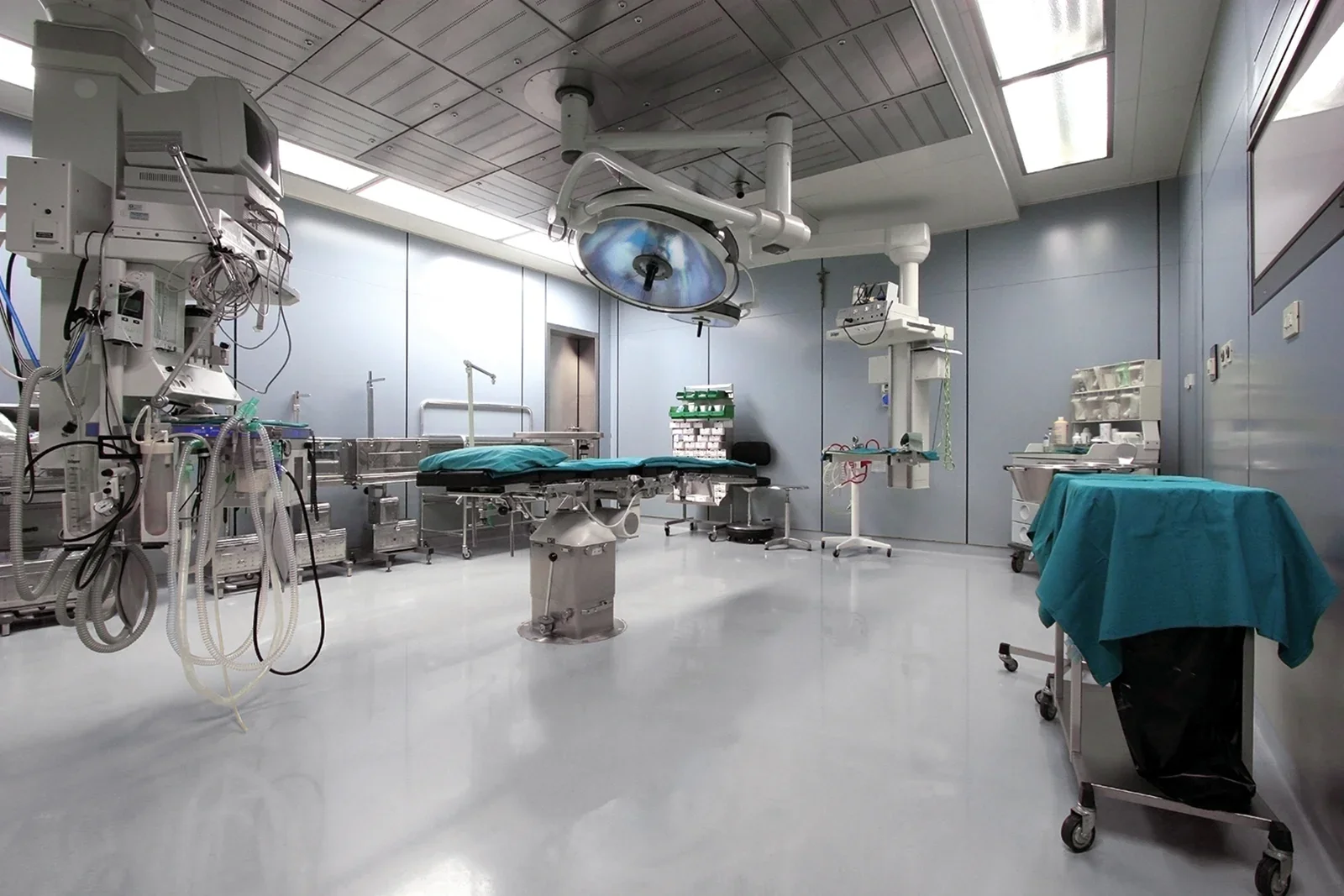
Smalto epossidico bicomponente a base acqua con proprietà statico-dissipative. Idoneo per ambienti con presenza di dispositivi sensibili alle cariche elettrostatiche (rif. ANSI/ESD STM 97.1 /97.2 e IEC 61340-5-1). Idoneo per pavimentazioni in ambienti Atex classe II e pavimentazioni antistatiche secondo EN1504-2 classe II. Aspetto lucido.
Tipologia: Rivestimenti Statico-Dissipativi


Descrizione
Finitura colorata a due componenti (A+B) a base di resine epossidiche ed amminiche in dispersione acquosa, ad alto contenuto di solidi. Innovative materie prime a base di nanotubi di carbonio conferiscono al rivestimento una conduttività elettrica conforme alle principali norme del settore ESD. Il valore di resistività risulta omogeneo e costante su tutta la superficie e permette di disperdere le cariche in superficie e di scaricarle trasversalmente sullo strato sottostante. Ottima resistenza all’usura. Facile pulibilità e sanificabilità della superficie.
Utilizzi
- Verniciatura statico-dissiaptiva colorata di pavimenti all’interno di fabbricati.
- Verniciatura per rinnovare la colorazione di vecchie pavimentazioni in resina.
- Smalto per zoccolature murali. Idoneo per ambienti Atex, Classe II.
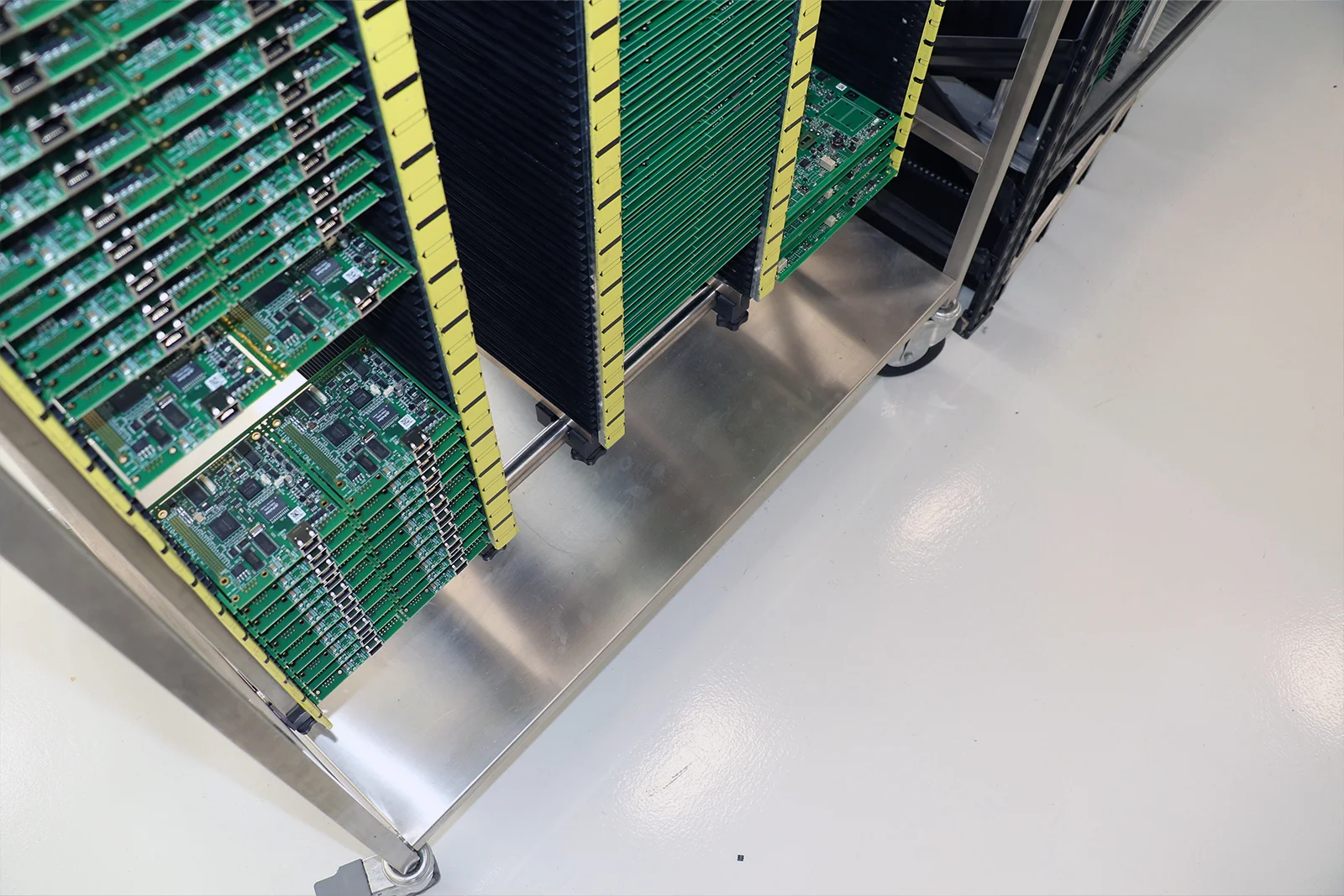
- Idoneo per aziende elettroniche e ovunque si producano o si assemblino dispositivi sensibili alle cariche elettrostatiche (rif. ANSI/ESD STM 97.1/97.2 e IEC 61340-5-1).
- Verniciatura di pavimentazioni con proprietà antistatiche in classe II in riferimento a EN 1504-2
Supporto
Il sottofondo deve possedere una resistenza minima alla compressione di 25 N/mm2 e a trazione di 1,5 N/mm2.
Preparazione del supporto
Fondi in cls devono essere solidi, asciutti (stagionati se di nuova costruzione), livellati, assorbenti, non inquinati da oli, detergenti, disarmanti, polveri od altre sostanze. Verificare che non sia presente umidità di risalita. Valutare il tipo di preparazione meccanica più conveniente (abrasivazione o levigatura). Eventuali buchi e lievi anomalie possono essere preventivamente riparati con PAVIRAPID o SIVITCOL.
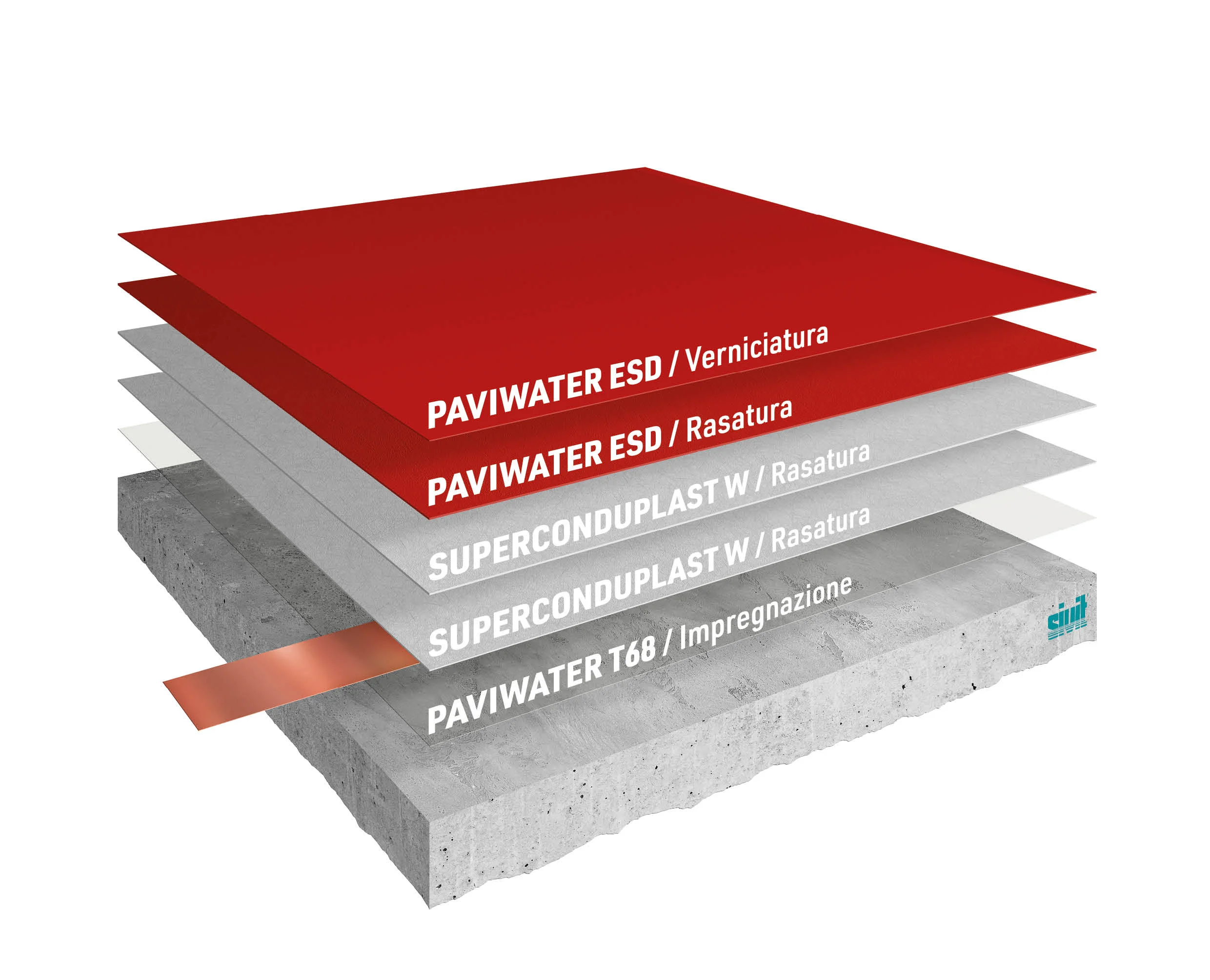
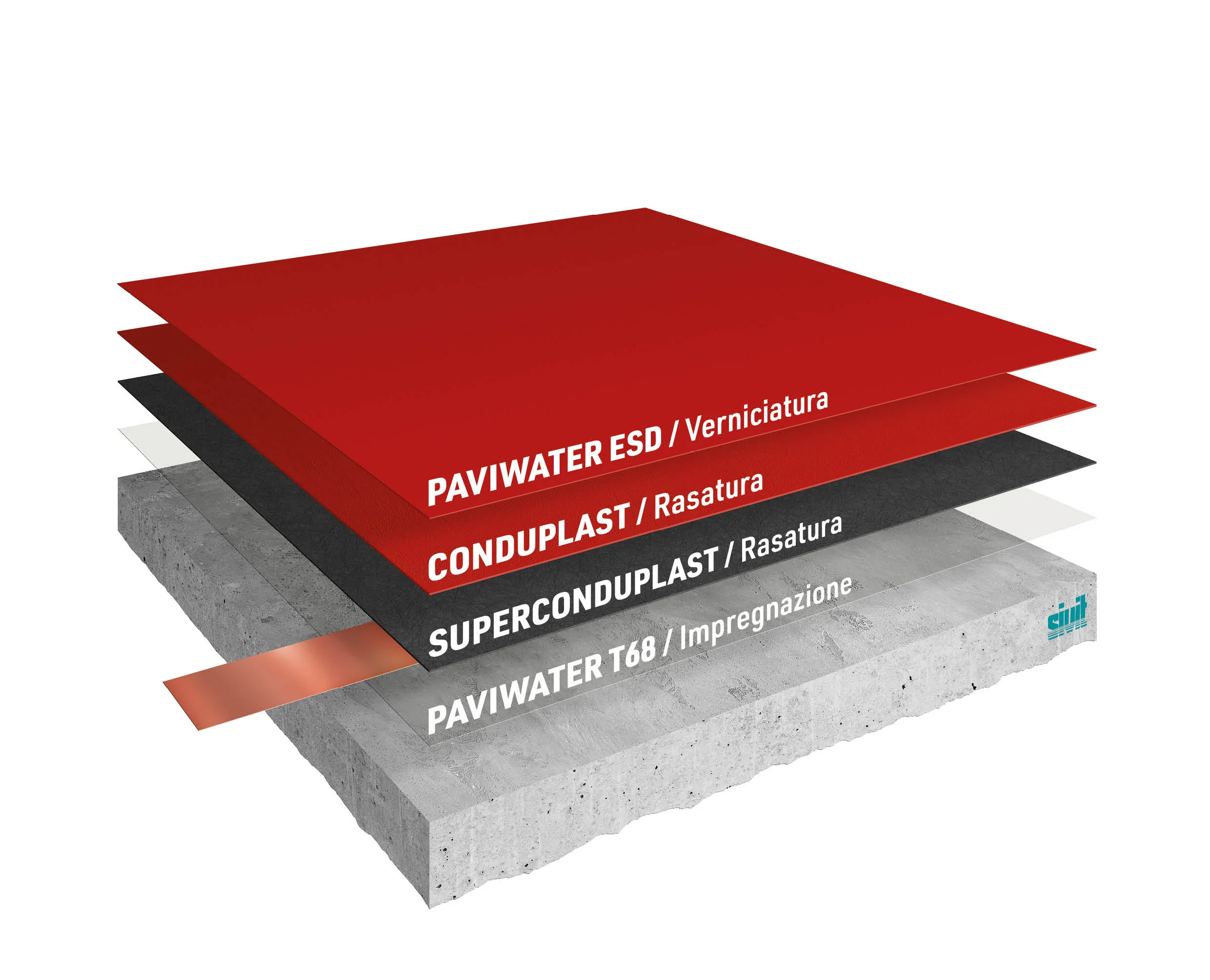
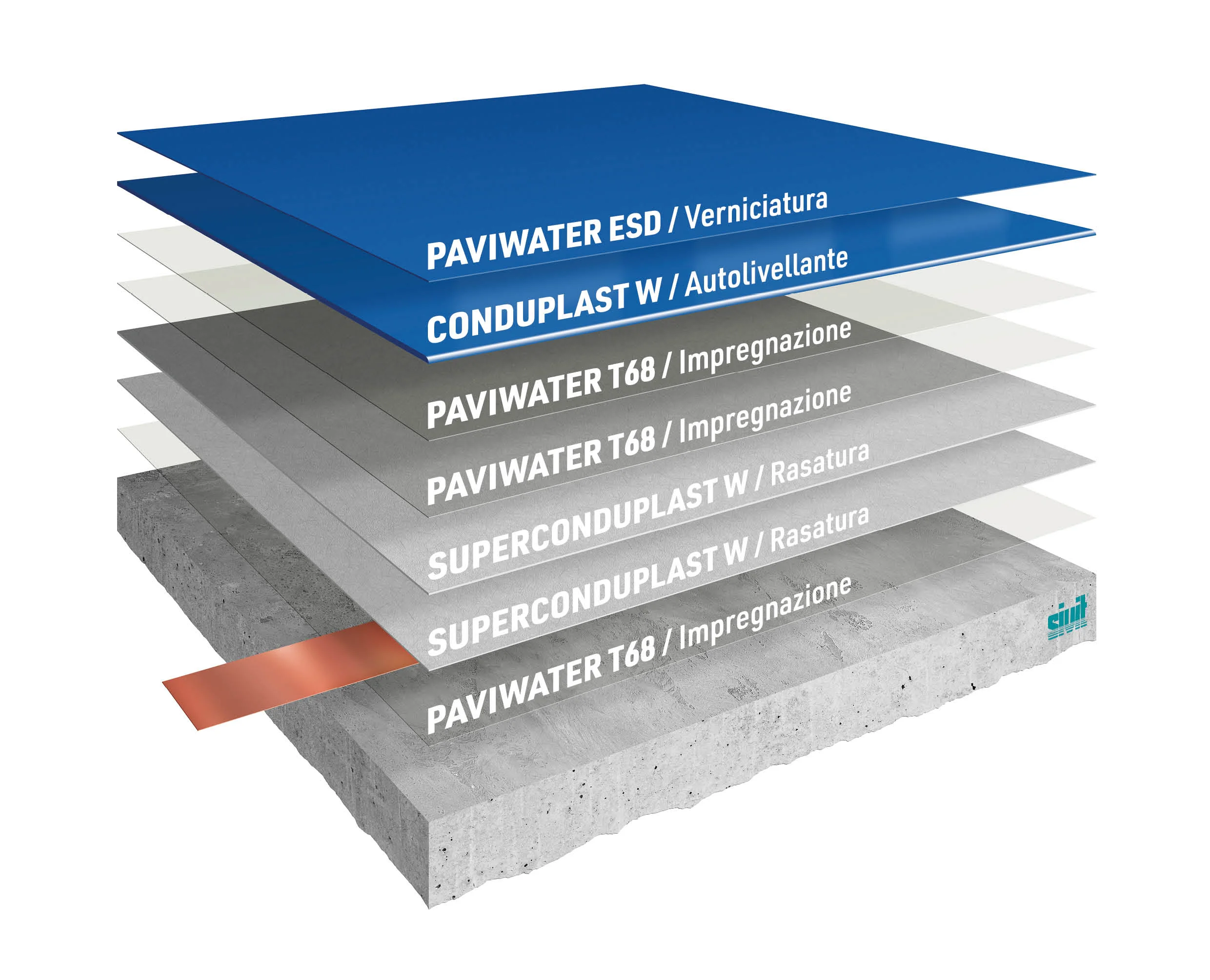
Pavimenti piastrellati vanno abrasivati o levigati fino a superficie completamente opacizzata. Rivestimenti in resina già esistenti vanno abrasivati o levigati, eliminando quindi i residui di polvere. Superfici cementizie assorbenti o tendenti a sfarinare vanno prima trattate con PAVIWATER T68 diluito 1:3 con acqua.
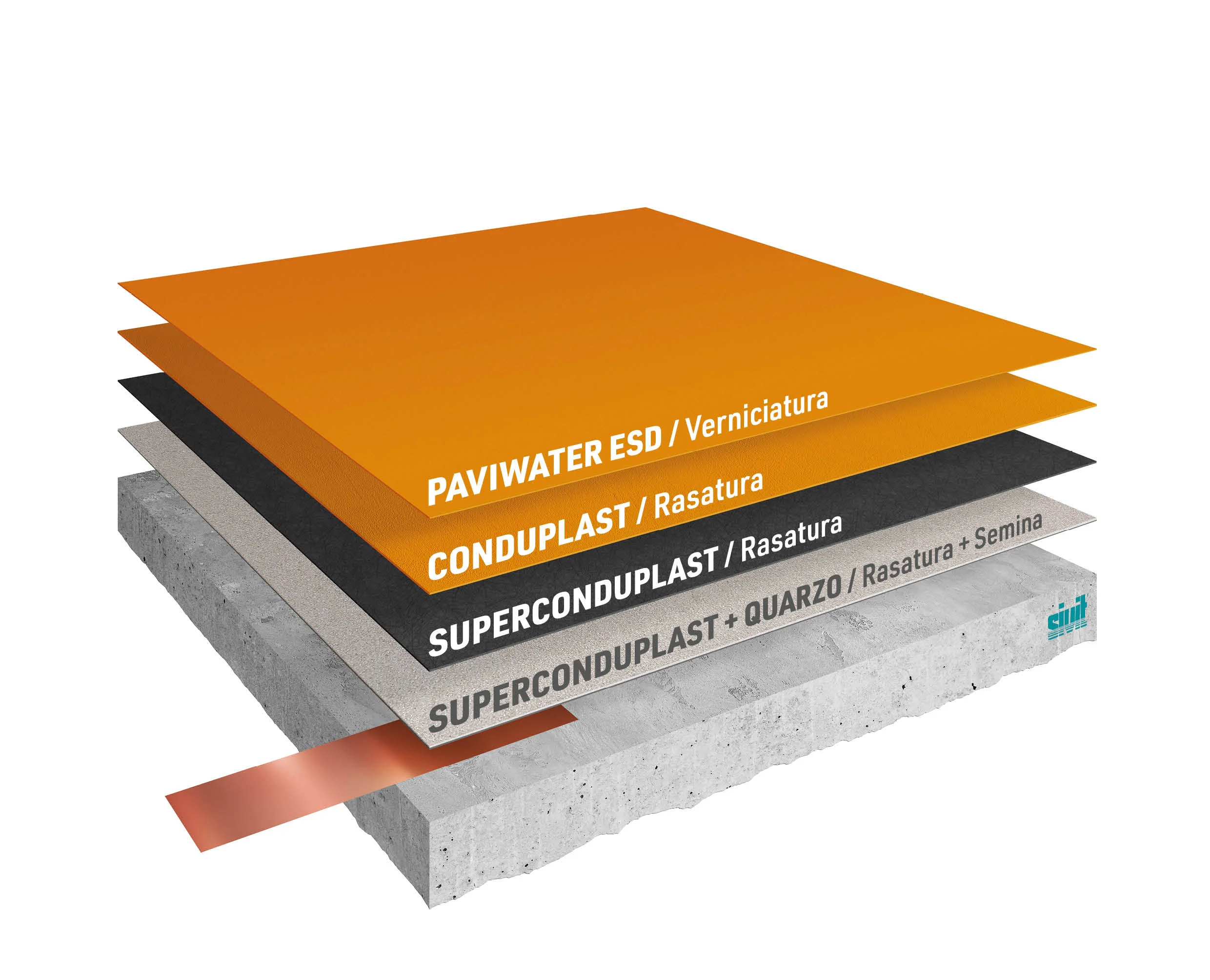
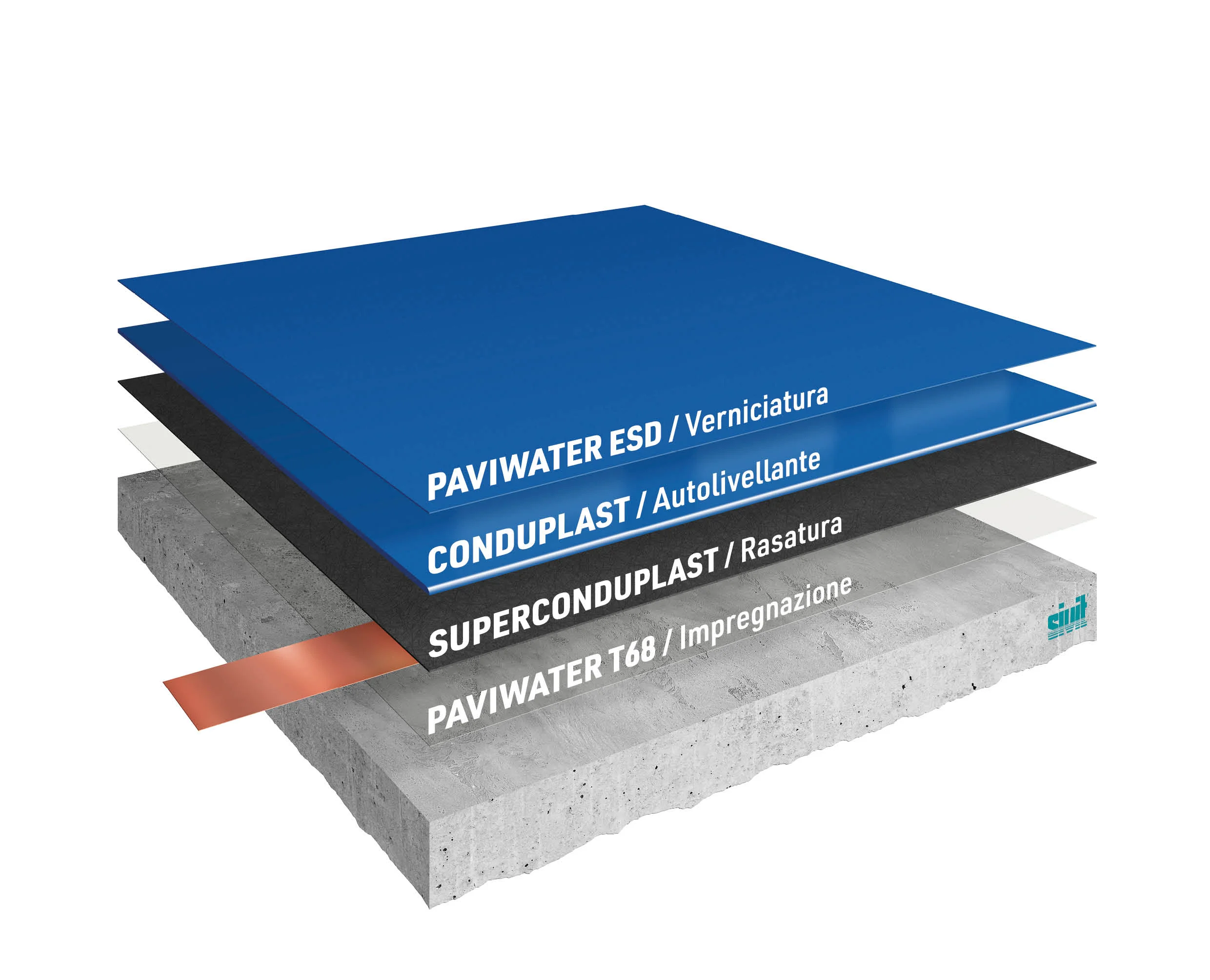
I supporti preparati mediante levigatura che presentano segni di abrasione vanno rasati con formulati Sivit idonei (contattare l’Assistenza Tecnica Sivit). Supporti umidi o soggetti alla risalita capillare di umidità vanno trattati con SUPERCONDUPLAST W.
Applicazione
Mescolare bene la pasta colorante COLORPASTA W per omogeneizzare eventuali sedementi.
Al momento dell'applicazione unire la pasta al componente A e miscelare con cura. Aggiungere poi il componente B e miscelare per 2 minuti, utilizzando adeguata attrezzatura (trapano con elica) e avendo cura di pulire con spatola le pareti dei contenitori al fine di miscelare tutto il prodotto.
Terminata la fase di miscelazione, rispettare il tempo di induzione lasciando riposare il prodotto nella latta.
Se necessario, prima dell'applicazione predisporre punti di messa a terra applicando bandelle di rame in corrispondenza delle scatole elettriche.
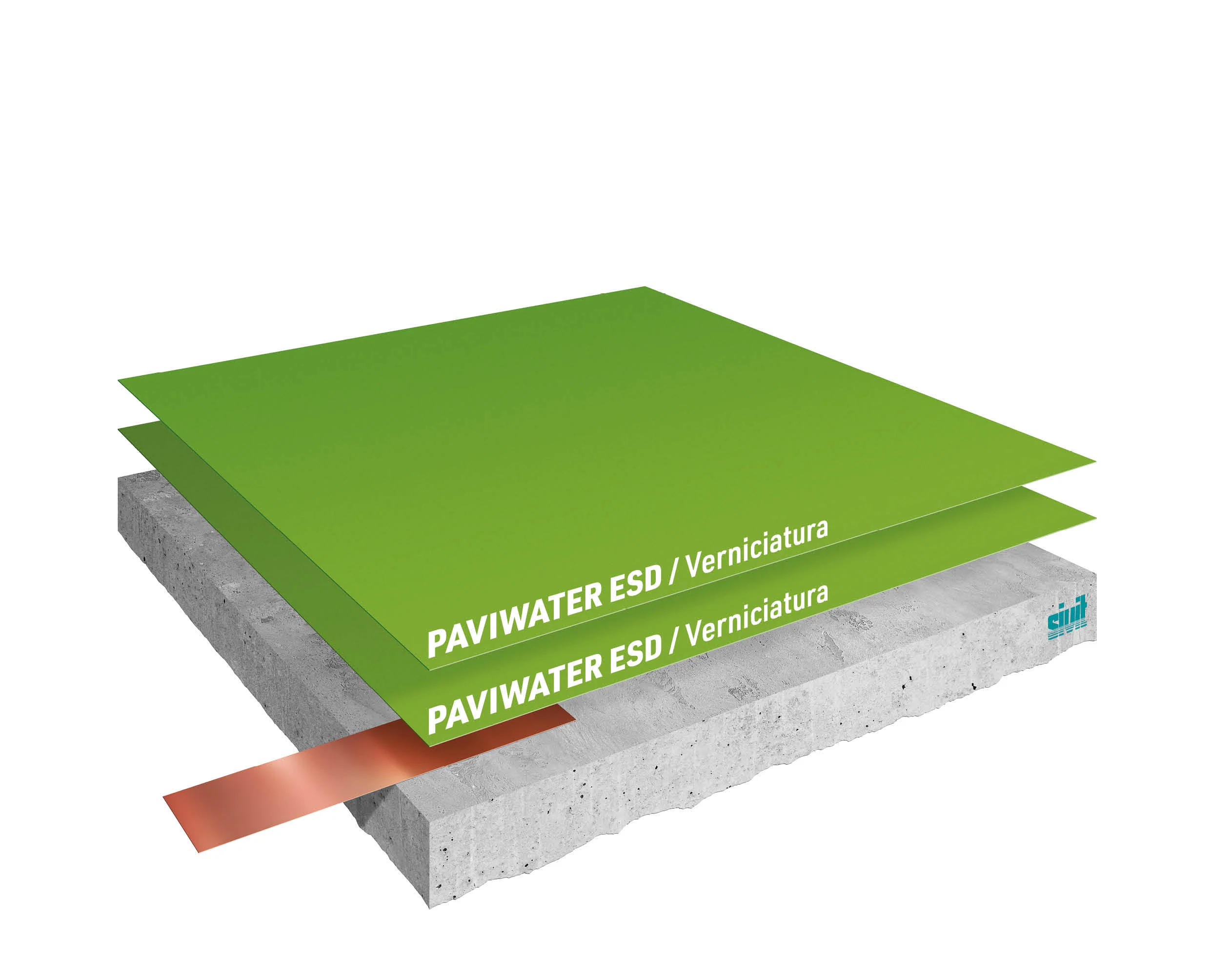
Verniciatura statico-dissipativa.
Aggiungere alla miscela A+B, lentamente e sotto agitazione, 10% di acqua di diluizione.
Rimescolare il prodotto per 1 minuto e applicare a rullo per un consumo di ~0,130 kg/m2 per ciascuna ripresa. Durante l’applicazione mantenere in agitazione il prodotto per evitare la sedimentazione.
Per ottenere una superficie antiscivolo, aggiungere il 3-5% in peso di SFERETTE DI VETRO (FINI o GROSSE).
Verificare sempre che questa aggiunta non influisca sulle certificazioni esistenti
Rasatura statico-dissipativa.
Aggiungere alla miscela il 30% in peso di SFERETTE DI VETRO ed applicare con cazzuola americana, per un consumo massimo di 0,200 kg/m2. Procedere poi con l'applicazione di una seconda mando a rullo secondo le modalità sopra indicate.
Attenzione: evitare di preparare miscele parziali di prodotto per non incorrere in accidentali errori, che potrebbero comportare un mancato o incompleto indurimento.
Se non si rispettano i tempi di induzione e di utilizzo, si può avere difformità della finitura, evidenziata da diverso colore e grado di lucido. Proteggere il prodotto applicato da umidità, condensa ed acqua per almeno 24 ore.
N.B. La sovrapplicazione di sistemi vernicianti trasparenti protettivi non specifici rende nuovamente isolata la superficie.
Avvertenze
Diversi lotti di produzione del medesimo colore possono presentare piccole differenze: ove possibile utilizzare materiale proveniente da un unico lotto di produzione per ciascuna area da trattare.
Alcuni colori a base di pigmenti organici (rossi, blu, verdi, gialli intensi, …) tendono a cedere colore nel caso in cui siano sottoposti ad abrasione (a secco o a umido): in questi casi si consiglia di applciare come ultima mano un rivestimento di tipo PU(FINISOL ESD).
Specifiche tecniche
| DATI PRODOTTO | |
|---|---|
| Colore | Neutro da pigmentare (verificare comunque sempre a priori la fattibilità del colore con Assistenza Tecnica Sivit) |
| Consumo | a rullo: 0,100-0,130 kg/m2 a rasare: 0,200 kg/m2 di (A+B) + e 0,060 kg/m2 di SFERETTE DI VETRO |
| Peso specifico (a 25°C): miscela (A+B) parte A parte B |
1,48 +/- 0,05 g/ml 1,56 +/- 0,05 g/ml 1,10 +/- 0,05 g/ml |
| Viscosità (a 25°C): miscela (A+B) miscela (A+B) diluita al 10% |
17.000-19.000 mPa.s (spindle 3, rpm 2) 2.000-3.000 mPa.s (spindle 3, rpm 2) |
| Residuo secco (A+B) | 67-70% in peso |
| VOC pronto uso (D.lgs 161/06) | < 50 g/l Cat.A/j. Pittura bicomponente ad alte prestazioni (BA). |
| Punto di infiammabilità | Non applicabile |
| Magazzinaggio | 12 mesi, conservare in luogo asciutto ad una temperatura compresa tra i 10°C ed i 35°C |
| DATI APPLICAZIONE E TEMPI | |
|---|---|
| Rapporto di miscela | in peso: A=75, pasta=25, B=33 |
| Tempo di induzione | 15 min |
| Pot-life (50% U.R.) | a 25°C 105 min |
| Secco al tatto (50% U.R.) | a 25°C 4-6 ore |
| Ricopertura (50% U.R.) | a 25°C da 14 a 36 ore |
| Indurimento in profondità (50% U.R.) | a 25°C 7 giorni |
| Condizioni ambientali d’uso | Temperature comprese tra i +15°C e i +35°C, U.R. < 70% |
| Temperatura superficie | Tra i +10°C e i +30°C |
| Manutenzione rivestimento | Per le operazioni di pulizia utilizzare detergenti neutri |
| DATI TECNICI PRESTAZIONALI | |
|---|---|
| Aspetto | Superficie leggermente bucciata |
| Gloss (60°) | 60-65 Il grado di brillantezza del prodotto PAVIWATER ESD applicato è influenzato da diversi fattori: temperatura del materiale, umidità ambientale, temperatura di applicazione, tempo di induzione e porosità del supporto. |
| Resistenza all’abrasione norma UNI 8298-9 | 53 mg (TABER Mola CS-17-1000 giri - 1000 g di peso) |
| Scivolosità (D.M. 236/89) | µ>0,40 (con il 3% di SFERETTE DI VETRO FINI) |
| Scivolosità (DIN 51130) | R11 (con il 5% di SFERETTE DI VETRO GROSSE) |
| Resistenze chimiche | Contattare il Servizio Tecnico Sivit per informazioni dettagliate |
| Resistività superficiale punto-punto (UNI EN1081) | 1,0•107 - 1,0•108Ω |